
















Notice on Incomplete Submissions


The article must be submitted exclusively to Cogitare Enfermagem and must not be submitted to any other journal. It must be published in full in Portuguese, English and Spanish.
The maximum number of authors is limited to 7 (seven); requests for exceptions will be analyzed by the Editor-in-Chief. The authors are responsible for declaring conflicts of interest, financial, technical, institutional, or personal support related to the study, and for acknowledgments.
The article must not identify the authors; this identification should only be on the identification page.
The words "HIGHLIGHTS", "SUMMARY", "DESCRIPTORS", "INTRODUCTION", "METHOD", "RESULTS", "DISCUSSION", "FINAL CONSIDERATIONS/CONCLUSION", "REFERENCES" and others that begin the sections of the body of the article should be typed in ALL CAPS, BOLD and LEFT ALIGNED.
This stage is for authors to identify the Highlights or the main results and conclusions of their article. Therefore, three to four short sentences should be written, with up to 10 words in each sentence, showing the main contribution of the study. Each sentence should be no longer than 75 characters.
Example: DESCRIPTORS: Education; Nursing care; Learning; Nursing; Teaching.
This should contain justification, theoretical basis and objectives. The justification should clearly define the problem, highlighting its importance, gaps in knowledge, and the theoretical framework used when applicable.
Example: "Of the 100 participants, 15 (15%) reported improvement and six (6%) reported worsening".
Presentation of relevant aspects and interpretation of the data obtained. Relation and discussion with research results, implications, and limitations of the study. Data included in the results should not be re-presented.
Highlight the most important findings and comment on contributions to the field.
Based on the objectives, results, and discussion, and avoiding statements unrelated to the study and/or new interpretations, include the contributions made by the study.
This section should be used to acknowledge funding agencies or organizations that contributed in any way to this study. It should not be used to thank individuals or authors who participated in the research.
Acknowledgments, financial or technical support, declaration of financial conflict of interest and/or affiliations: It is the responsibility of the authors to provide information and authorization regarding the items mentioned above. Cite the number of the public notice to which the research is linked. Due to CAPES Ordinance 206, of September 4, 2018, which stipulates that CAPES must be cited, we ask all authors to state that they have received research grants in all articles submitted. As of this date, authors must refer to the support received because of activities funded by CAPES, in full or in part.
References should be numbered consecutively in the order in which they first appear in the text and presented according to Vancouver style.
Attachments, when essential, should be cited in the text and inserted after the references.
Example: Table 2, Table 1, Figure 3.
The source of the information in the illustration, if it comes from other research, must be cited, and included in the references.
The heading and sources (if any) should be written in Times New Roman font, size 12, with single spacing between the lines.
It should be inserted as close as possible to the text.
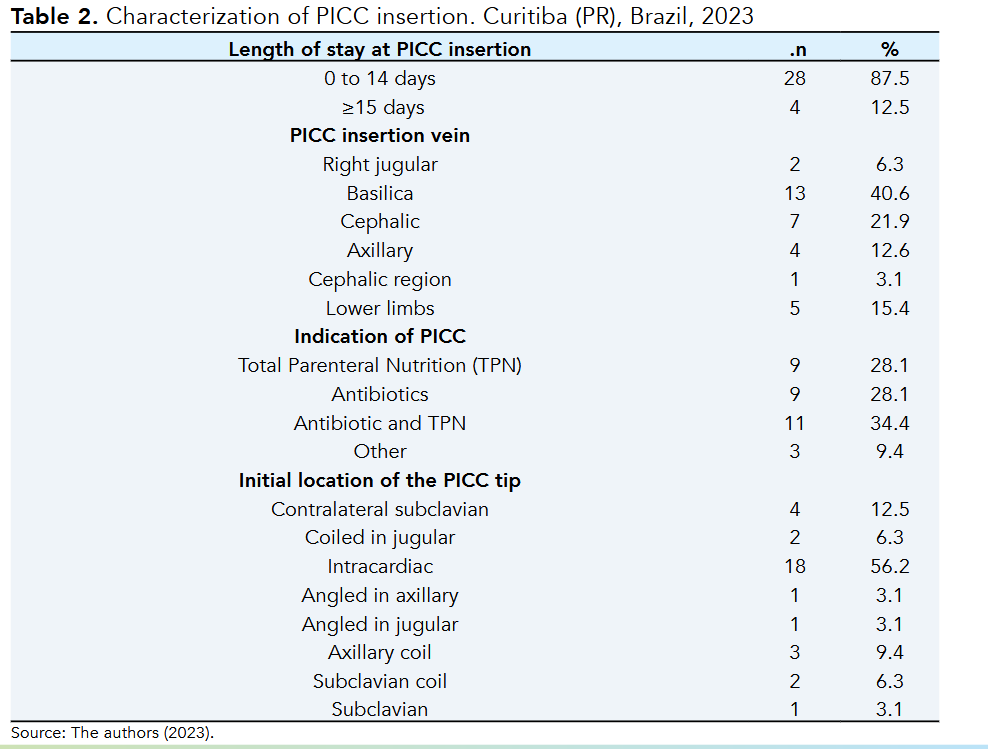
TABLES:
Example:
CHARTS:
Example:

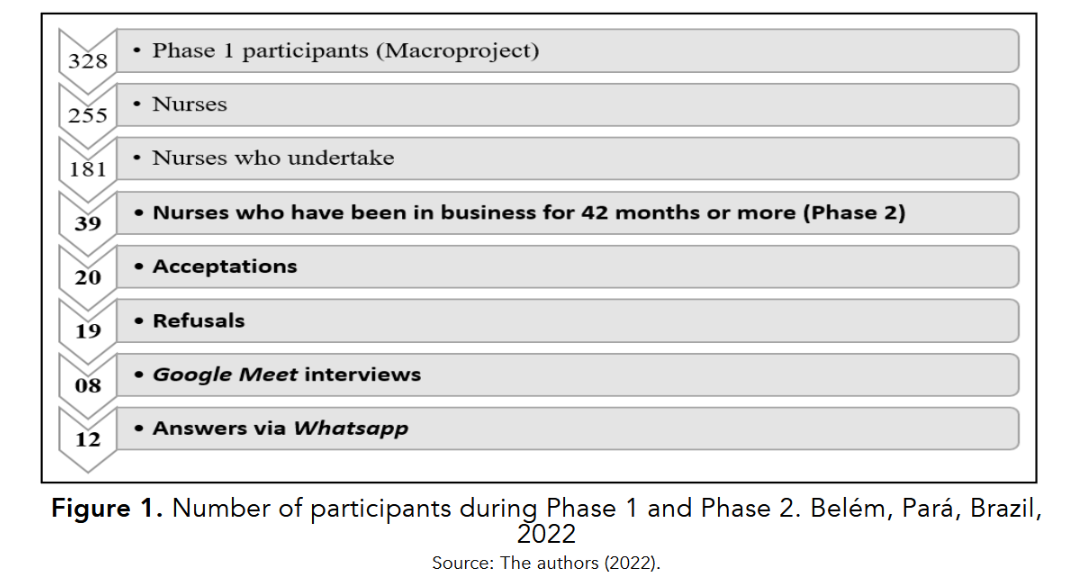
FIGURES (Graphs, Diagrams, Photos)
Example:
1) Indirect quotation or paraphrase
Give the reference number immediately at the end of the text, without a space and before the graphic sign.2) Sequential/intercalated citation
Separate the numbers of each reference by a dash when it is sequential.
Example:
8-10 - the information states that references 8, 9, and 10 are included.
Separate the numbers of each reference by a comma when it is interspersed.
Example:
8,10 - the information states that references 8 and 10 are included.
3) Direct quotation of up to three lines
Inserted in the body of the paragraph and enclosed in quotation marks. The number and page corresponding to the literal quotation must be superscripted and separated by a colon.
Example:
8:13 - the information refers to reference 8, page 13.
4) Direct quotation of more than three lines
In a new paragraph, right justified and with a 4 cm indentation from the left margin, typed in Times New Roman 10 font, single-spaced between lines, without quotation marks.Example:
8:345-6 - the number 8 refers to the reference and 345-9 to the pages.
5) Testimony
The transliteration of a statement should appear in a new paragraph, typed in Times New Roman 12, italics, single-spaced between lines, without quotation marks.Example:
[Communication] is expressing something, saying something to someone, it's the act of communicating [...] (Family Member 2).
Digital Object Identifier Registration (DOI)
The DOI numbers assigned to published articles and editorials will only be activated after the texts have been published in the SciELO Brazil Collection.