
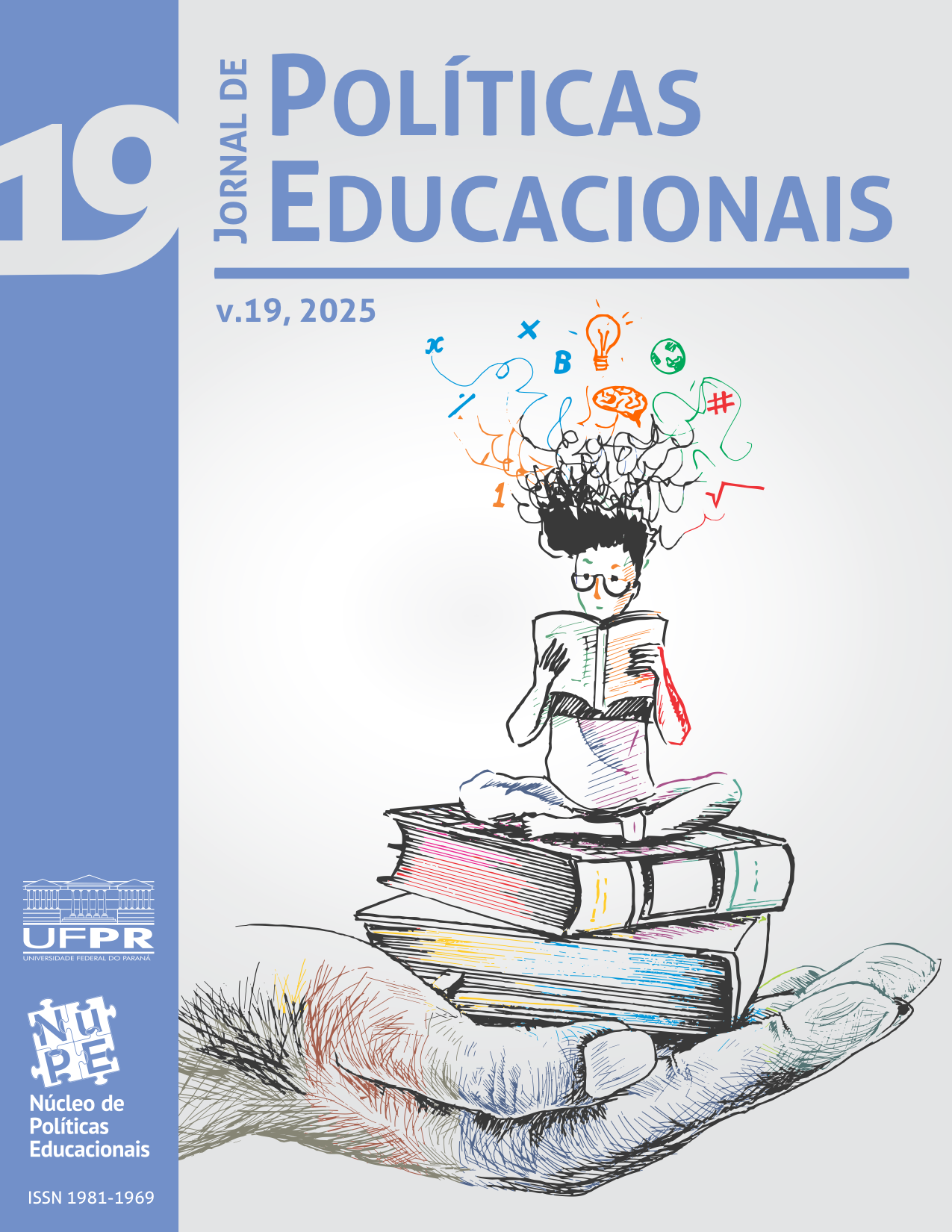
A TRAJETÓRIA DO PLANEJAMENTO EDUCACIONAL EM MOÇAMBIQUE: TENDÊNCIAS PARA A FORMAÇÃO DE PROFESSORES DA EDUCAÇÃO BÁSICA
DOI:
https://doi.org/10.5380/jpe.v19i1.98538Palabras clave:
Políticas Educacionais;, Planejamento Educacional;, Formação de Professores da Educação Básica em Moçambique.Resumen
O estudo em tela tem por objetivo analisar as principais tendências para a formação de professores da educação básica em Moçambique à luz dos Planos Estratégicos da Educação (PEE) do período de 1999 a 2019, com vistas a apontar os avanços alcançados e retrocessos relativos à formação de professores. Para o alcance dos objetivos propostos, recorreu-se a uma abordagem qualitativa de cunho documental e bibliográfico, baseado na análise da legislação educacional moçambicana, mais especificamente os planos estratégicos de educação. Os resultados permitem constatar que, no período em estudo, houve um aumento significativo no acesso à educação básica, considerando o ingresso, a retenção das meninas e a conclusão do ensino primário, movimento que corroborou para o aumento da demanda de professores com formação pedagógica para atuar nesse nível de ensino, especialmente diante da decisão do Ministério da Educação de finalizar a contração de professores sem essa formação no país, todavia, é significativo o número de professores com formação em níveis elementar e básico A necessidade cada vez mais premente de formação pedagógica resultou especialmente na formação continuada e em serviço, via Educação a Distância (EaD). Diante dos resultados as conclusões do trabalho permitem apontar como os principais desafios na formação de professores em Moçambique: a) ampliar o quadro de professores com formação inicial sólida; b) formar professores que atendam a diversidade cultural, linguística e física dos alunos dentro da sala de aulas; c) formar professores autônomos e reflexivos e não apegados ao tecnicismo pré-elaborado, ou seja, que não use apenas os materiais oferecido pelas escolas sob orientação central, provincial e distrital.
Palavras-chave: Políticas Educacionais; Planejamento Educacional; Formação de Professores da Educação Básica em Moçambique.
Citas
ANTÓNIO, Joaquim Inácio. A trajetória do Planejamento Educacional em Moçambique: tendências para a formação de professor da Educação Básica. 2023, 150 p. Dissertação (Mestrado em Educação). Programa e Pós-graduação em Educação, Universidade Federal do Paraná, Curitiba, 2023. Disponível em: https://acervodigital.ufpr.br/handle/1884/87658
Descargas
Publicado
Cómo citar
Número
Sección
Licencia
Autores/as que publicam nesta revista concordam com os seguintes termos:
a) Os/As autores/as mantêm os direitos autorais e concedem à revista o direito de primeira publicação, com o trabalho simultaneamente licenciado sob a Creative Commons Attribution License que permite o compartilhamento do trabalho com reconhecimento da sua autoria e publicação inicial nesta revista.
b) Os/as autores/as são autorizados/as a assinarem contratos adicionais, separadamente, para distribuição não exclusiva da versão publicada nesta revista (por exemplo, em repositórios institucionais ou capítulos de livros), com reconhecimento da sua autoria e publicação inicial nesta revista.
c) Os/as autores/as são estimulados/as a publicar e distribuir a versão onlline do artigo (por exemplo, em repositórios institucionais ou em sua página pessoal), considerando que isso pode gerar alterações produtivas, bem como aumentar o impacto e as citações do artigo publicado.
d) Esta revista proporciona acesso público a todo o seu conteúdo, uma vez que isso permite uma maior visibilidade e alcance dos artigos e resenhas publicados. Para maiores informações sobre esta abordagem, visite Public Knowledge Project, projeto que desenvolveu este sistema para melhorar a qualidade acadêmica e pública da pesquisa, distribuindo o OJS assim como outros softwares de apoio ao sistema de publicação de acesso público a fontes acadêmicas.
e) Os nomes e endereços de e-mail neste site serão usados exclusivamente para os propósitos da revista, não estando disponíveis para outros fins.
English version:
Authors who publish at JPE agree to the following terms:
a) The authors retain the copyright and grant JPE the right to first publication, with the work simultaneously licensed under the Creative Commons Attribution License that allows the sharing of the work with recognition of its authorship and initial publication in this magazine.
b) Authors are authorized to sign additional contracts, separately, for non-exclusive distribution of the version published in JPE (for example, in institutional repositories or book chapters, with acknowledgment of their authorship and initial publication at JPE).
c) Authors are encouraged to publish and distribute the online version of the article (for example, in institutional repositories or on their personal page), considering that this can induce the science, as well as increase the impact and citations of the published article.
d) This journal provides public access to all of its content, as this allows greater visibility and reach of published articles and reviews. For more information on this approach, visit the Public Knowledge Project, a project that developed this system to improve the academic and public quality of research, distributing OJS as well as other software to support the publication system of public access to academic sources.
e) The names and e-mail addresses on this website will be used exclusively for the JPE purposes, and will not be available for other purposes.
Versión en Español
Los autores que publican en esta revista aceptan los siguientes términos:
a) Los autores conservan los derechos de autor y otorgan a la revista el derecho de primera publicación, con la obra licenciada simultáneamente bajo la Creative Commons Attribution License que permite compartir la obra con reconocimiento de su autoría y publicación inicial en esta revista.
b) Los autores están autorizados a firmar acuerdos adicionales, por separado, para la distribución no exclusiva de la versión publicada en esta revista (por ejemplo, en repositorios institucionales o capítulos de libros), con reconocimiento de su autoría y publicación inicial en esta revista).
c) Se alienta a los autores a publicar y distribuir la versión en línea del artículo (por ejemplo, en repositorios institucionales o en su página personal), considerando que esto puede generar cambios productivos, así como aumentar el impacto y las citas del artículo publicado.
d) Esta revista brinda acceso público a todo su contenido, ya que esto permite una mayor visibilidad y alcance de los artículos y reseñas publicados. Para obtener más información sobre este enfoque, visite Public Knowledge Project, un proyecto que desarrolló este sistema para mejorar la calidad académica y pública de la investigación, distribuyendo el OJS, así como otro software para respaldar el sistema de publicación de acceso público para fuentes académicas.
e) Los nombres y direcciones de correo electrónico en este sitio serán utilizados exclusivamente para los fines de la revista, no estando disponibles para otros fines.

This work is licensed under a Creative Commons Atribution 4.0 International.