

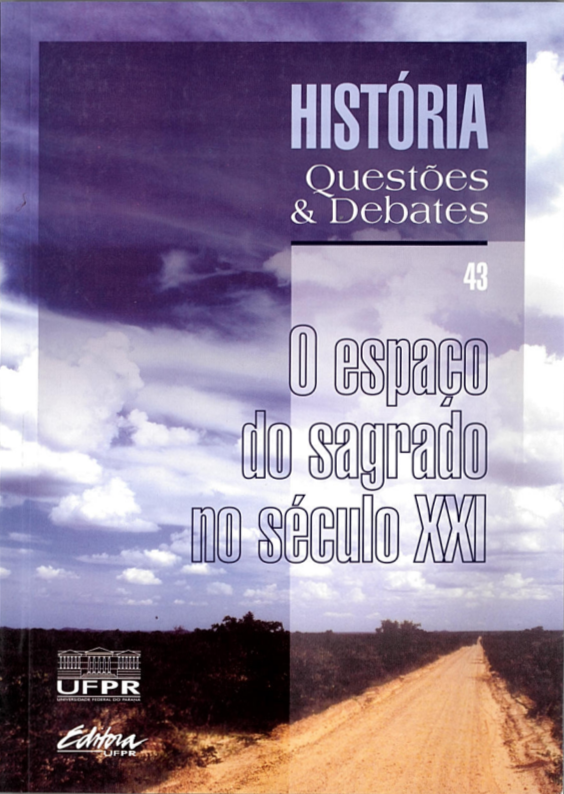
CHANGING REALITY: THE BAHÁ’Í COMMUNITY AND THE CREATION OF A NEW REALITY
DOI:
https://doi.org/10.5380/his.v43i0.7860Keywords:
Bahá’í Faith, Bahá’í Community, Religious Culture, Fé Bahá’í, comunidade Bahá’í, cultura religiosaAbstract
It is now well accepted by social scientists that human beings create reality socially and communally. The culture or world-view that is created is particularly stable in that it is taken for granted and is usually not therefore questioned. This paper looks at the attempts being made by the Bahá’í community throughout the world to change this sociallycreated reality. In particular, this paper looks at the hierarchically organized social structure that has been the norm for human beings ever since we started to live in cities. The Bahá’í teachings criticize this norm, hold it to be responsible for the competitiveness and aggression that currently afflicts the world with such ills as warfare (through national competitiveness), environmental degradation (through business competitiveness) and the social elite’s domination over and aggression towards women, the lower social classes and ethnic minorities. The Bahá’í teachings speak of the need to see the world in a different way: as one country with all human beings as the citizens of that country and equally valuable components of it. But it is above all in the structure and functioning of the Bahá’í community that this change
of reality is slowly being put into effect. Power and authority are taken away from individuals in the Bahá’í community structure. Authority i vested in institutions that are elected without electioneering or nomination of candidates. Decisions are taken on the basis of a participative consultation process. Power is decentralized as much as is practical and ultimately resides in the individual Bahá’í, since the institutions have no power to coerce the cooperation of Bahá’ís in their plans. The aim of the current plans that are being effected in the Bahá’í community is to increase human resources within the community by motivating every individual Bahá’í to take a full part in the processes of consultative study of the scriptures, devotional meetings and children’s
classes, thus changing the individual Bahá’ís from the passivity of being a member of a congregation to active participation in the community. It is only through such mobilization of the individual that power can effectively be devolved down to that level.
Downloads
Downloads
How to Cite
Issue
Section
License
Direitos Autorais para artigos publicados nesta revista são do autor, com direitos de primeira publicação para a Revista. Em virtude da aparecerem nesta revista de acesso público, os artigos são de uso gratuito, com atribuições próprias, em aplicações educacionais e não-comerciais.
Os textos da revista estão licenciados com uma Licença 
Creative Commons Atribuição-NãoComercial-CompartilhaIgual 4.0 Internacional.